
Why Monopoly Sucks
…and how we can use data to fix it - at least a little bit!
Some things are down to taste and others are objective truth. Monopoly sucking is clearly an objective truth, and a stance I will never back down from!
There is a well known “little known fact” about the origins of monopoly - that its original intent under it’s first incarnation as “The Landlord’s Game” created by Lizzie Magie in 1904 was to demonstrate the dangers of private monopolies.
It was supposed to suck to teach a lesson, but that doesn’t answer the question of why it sucks?
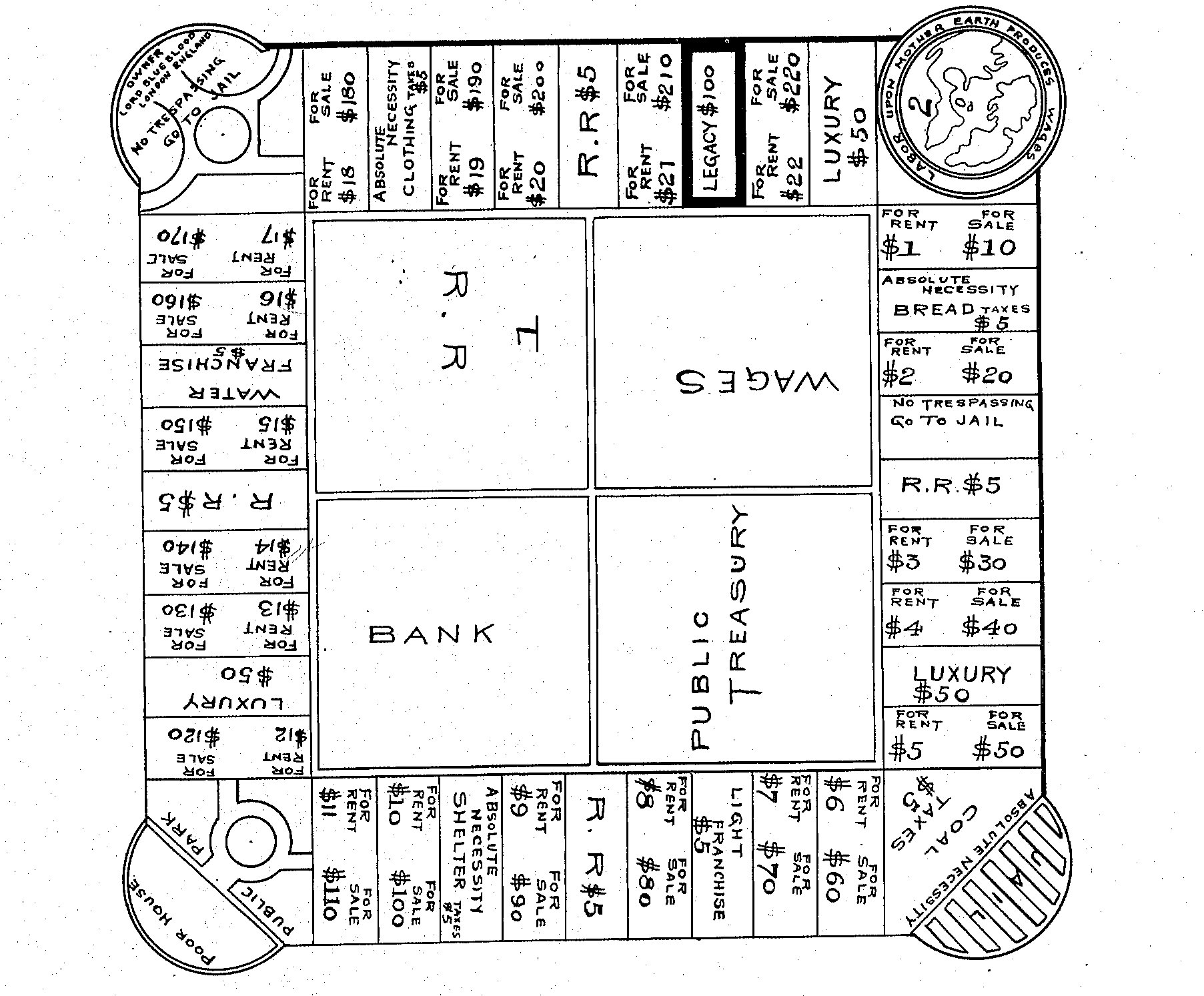
An illustration from Lizzie Magie’s original patent for “The Landlord’s Game”
January 5th 1904
I love board games and I’ve probably played more than most people - what any boardgame enthusiast will learn quite quickly, is that every board game is essentially a mix of luck and skill. A great game will balance these two, whilst building a strong theme and aesthetic to go with it. And even a game that’s all skill is fun when the opponents are well matched. But a game that’s all luck, that’s when a game can really suck.
Monopoly fits this last group perfectly, there’s really only one winning strategy that you can take - buy everything you can as fast as possible - and that just depend on what you roll and where you land. MORE LUCK!
So how can you fix the game at least a little bit? and what on earth has that got to do with data?
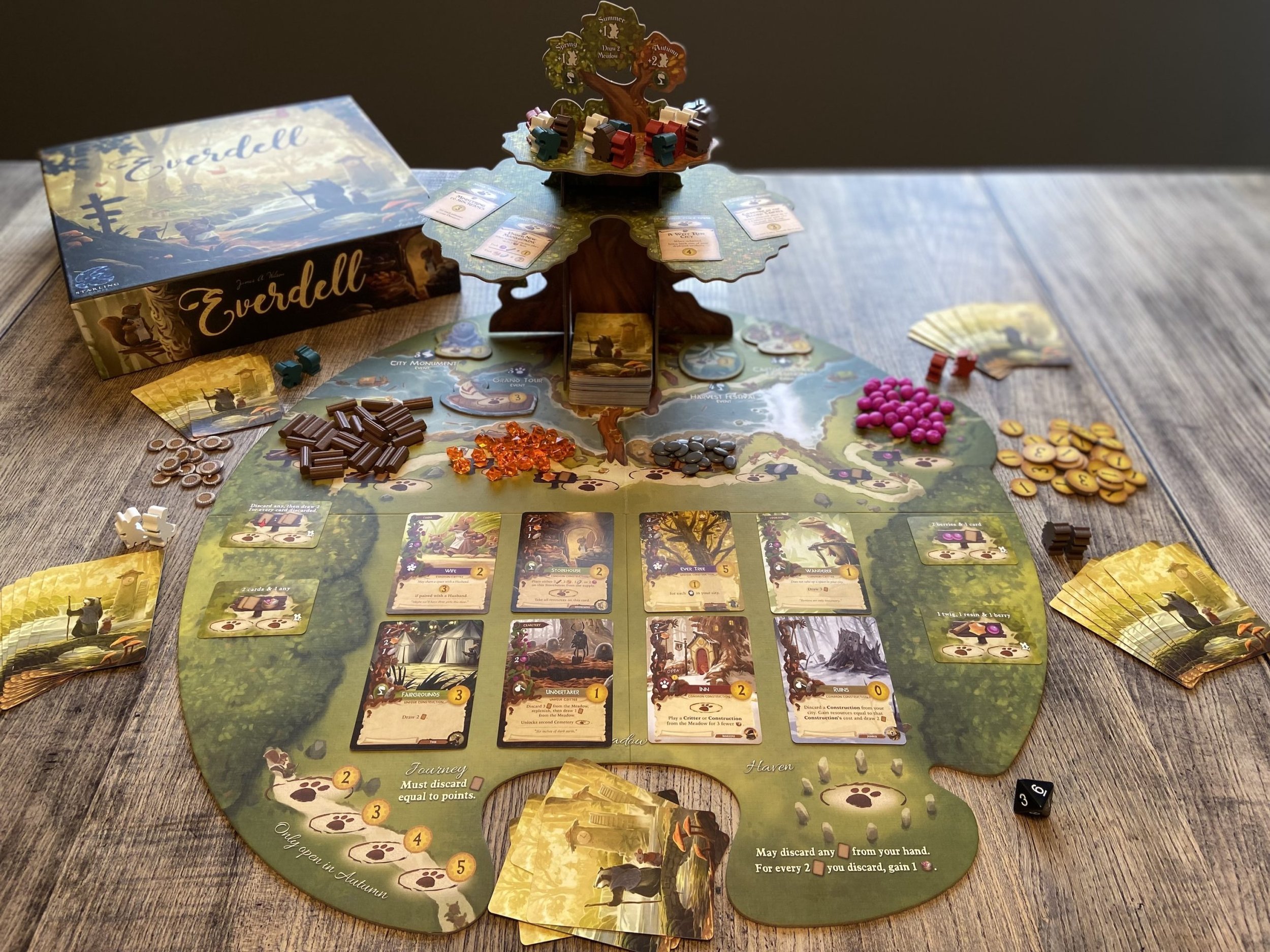
This is Everdell, one of my favourite boardgames. It has a great balance of luck and skill and beautiful theming to boot!
Well the answer is (in my opinion) to give the players some more agency within the game. An opportunity to strategize and not rely solely on shear dumb luck. So let’s take the most luck orientated component of any board game - the role of the dice - and see how data can be used to make monopoly better. The statistically minded of you may have guess where I’m going with this but it’s time for…
Distribution curves!!
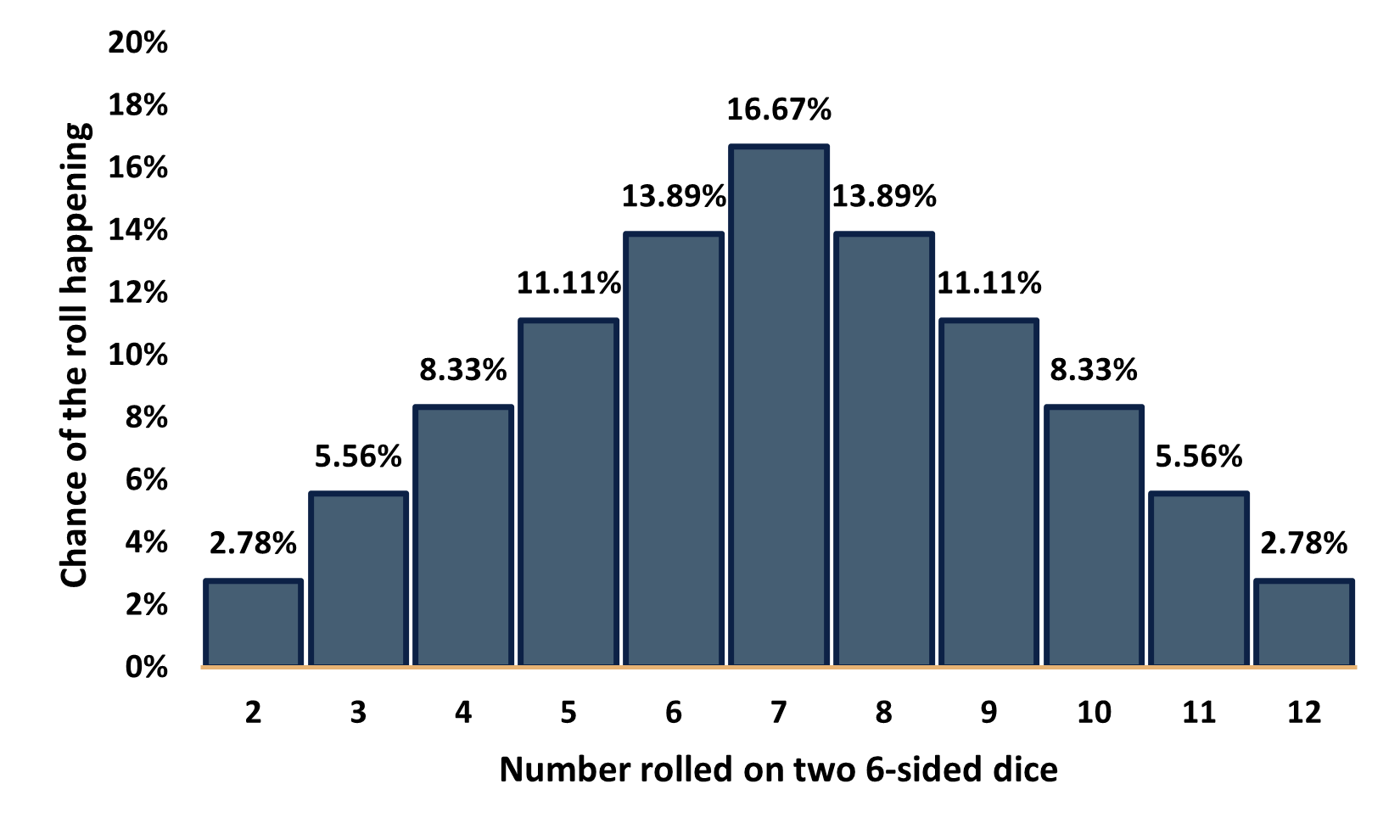
The distribution curve of two 6-sided dice (2D6 for short), the standard dice rolled for Monopoly.
A distribution curve is a graph that tells us how a certain dataset is spread out. In the case of monopoly it’s telling us how likely each possible roll on the 2D6 is to come up. The graph above looks the way it does because it’s a reflection of how many combinations there are to role each number. For example there’s only one way to roll a 2 - 1+1 and equally there’s only one way to roll a 12 - 6+6. Slap bang in the middle of that is 7 which has the most possible ways of being rolled - 6 ways to be rolled. The distributions curve for 2D6 is what’s know as normally distributed, which just means whatever’s going on on the left hand side of the graph is mirrored on the right hand side, giving us and even curve.
What does that mean for playing monopoly though?!
Basically it just lets us know what numbers we’re more likely to roll when playing the game. Rolling a 7, as we’ve covered, is most likely (16.67% of the time). Then rolling a 6 or 8 comes next (13.89% each) and so on and so on. Nice to know but in the standard game there’s absolutely nothing you can do with that information other than try and predict the likelihood of your own doom.
But if I’m going to lose I at least want a hand in choosing how I do it, and that distribution curve is suggesting I’m going to land somewhere on my little cousin’s fully built up greens, and I cannot be beaten by a 9 year old again! … sorry… anyway.
The solutions is to let the players pick a different distribution curve i.e. pick a different set of dice to roll.
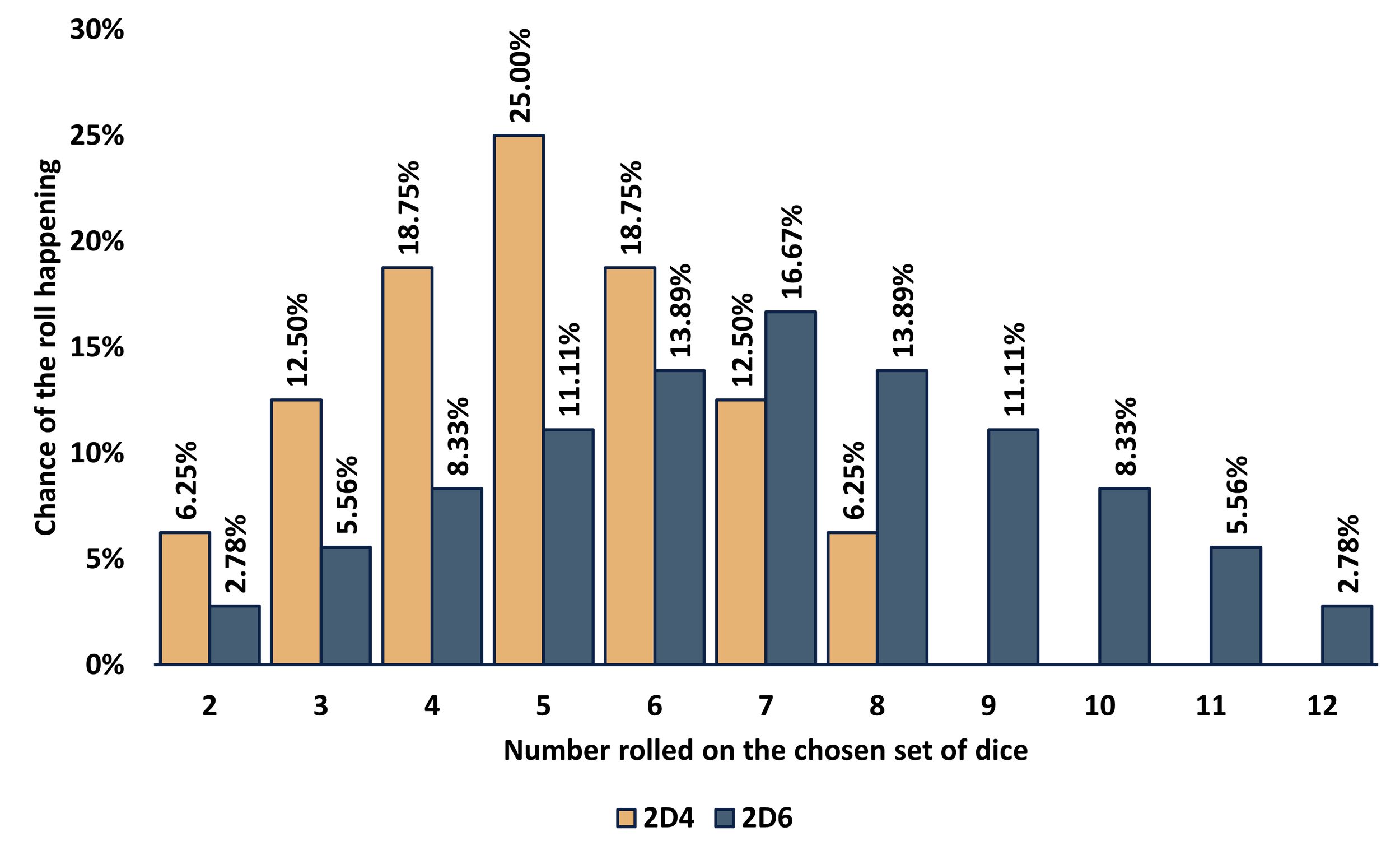
A comparison of the distribution curves of rolling two 4-sided dice (2D4) vs rolling two 6-sided dice (2D6).
Hopefully you can see from the comparison of distributions in the above graph that the set of dice you chose to roll - 2D4 or 2D6 , can really make a difference is where you’re likely to land. The great thing about the approach is there are no guarantees, you could still roll and 8 even if you’re aiming for a 5 on 2D4. You can a bit of strategy but there still some luck involved!
You wouldn’t have to leave it there either, you could mix and match dice, for instance 1D4 + 1D6, or increase the number of dice for something like 3D4 or even 3D6 if you want a 0.46% chance of whizzing around the board on an 18.
It might be super nerdy but I’d seriously give it a go next time someone suggests playing. Fingers crossed it’ll make the game a little less frustrating at time and a little more fun! 🤞
Happy gaming! - Alex
